
Thanks for continuing on from the card I sent you. Listen to this short intro on the origin of this story.
-
As the holidays approach, I wanted to go deeper into the meaning of Christmas. The Ancient source, if you will. And of course I asked AI where Christmas began.
The winter solstice. The spine that Christmas gradually wrapped itself around.
Long before Christianity—or even writing—humans noticed one terrifying truth.
The days were getting shorter.
Cold tightened its grip.
Food thinned.
Darkness arrived earlier each night.Death felt close.
Then, almost imperceptibly, something changed.
The sun stopped shrinking… and began to return.
That moment wasn’t abstract.
It meant survival.
It meant the next harvest might come.
It meant children might live.
It meant the world was not ending.No one faced that moment alone.
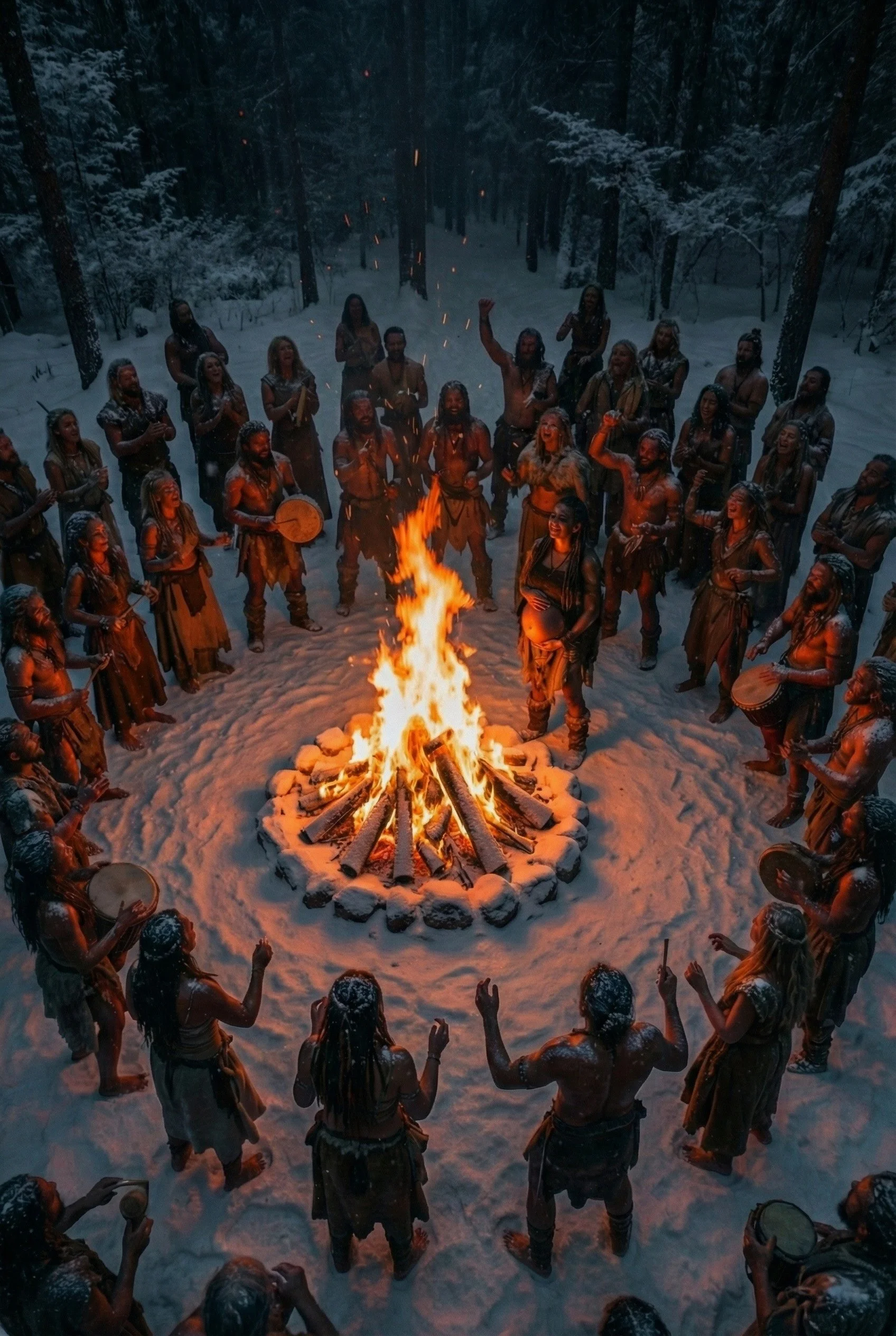
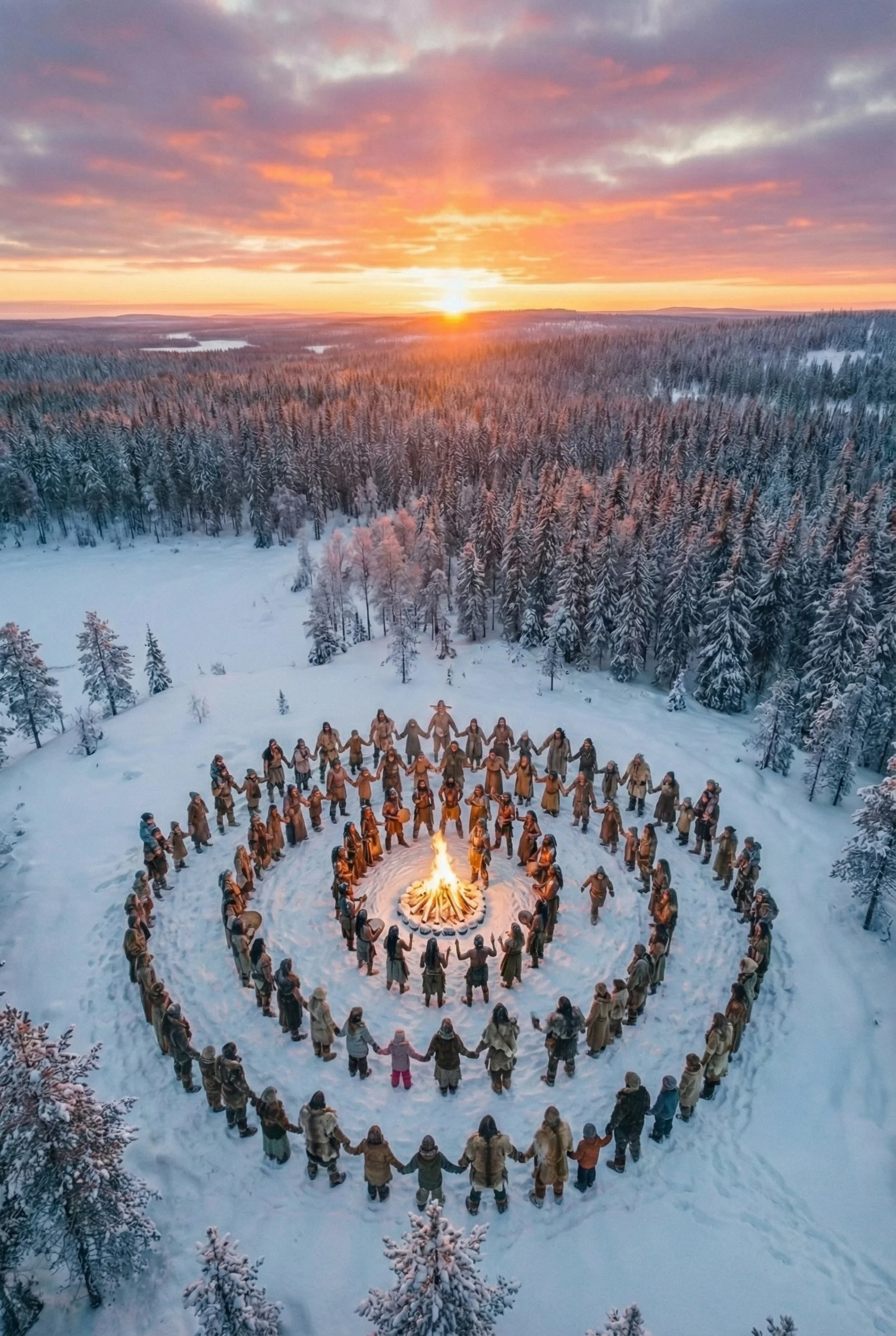
People gathered—not out of tradition, but necessity.
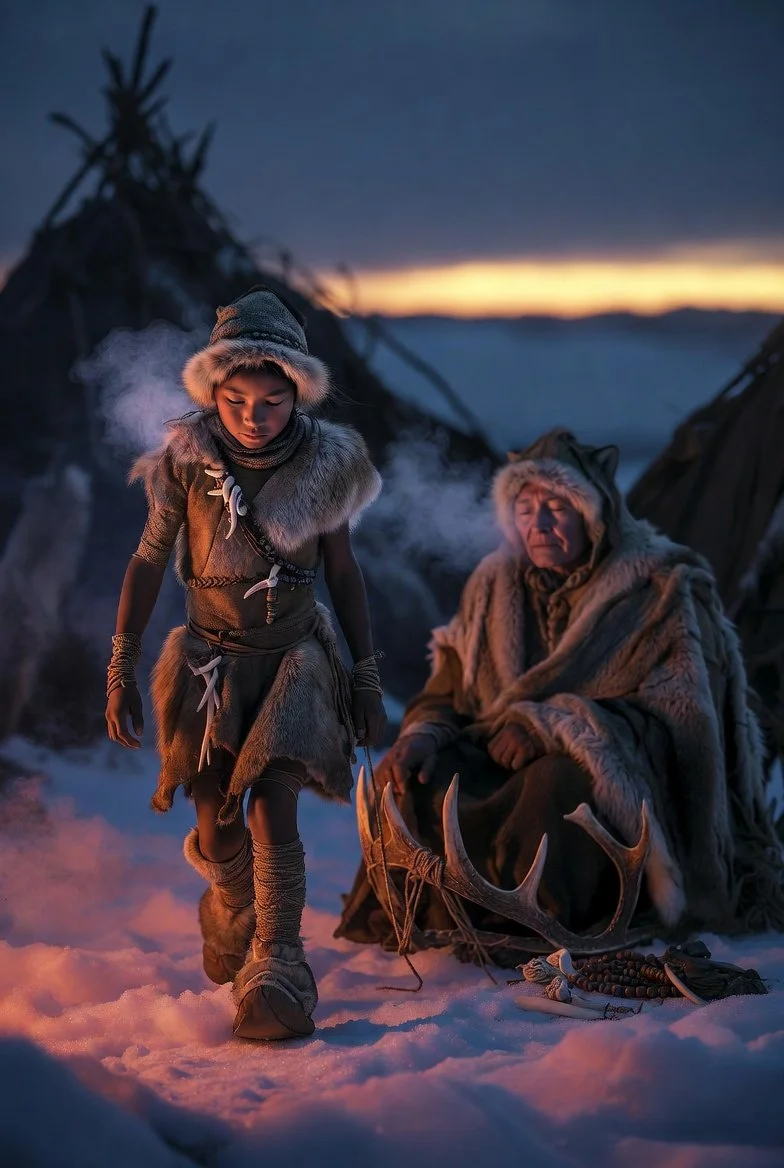
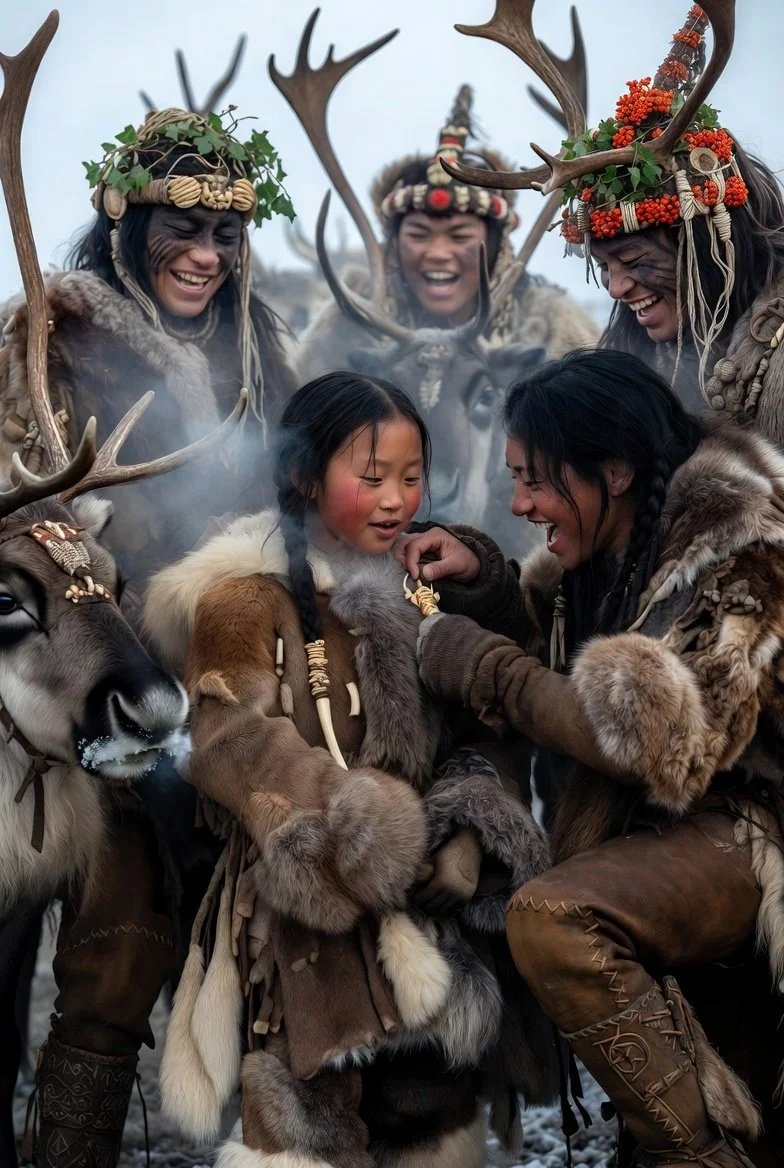
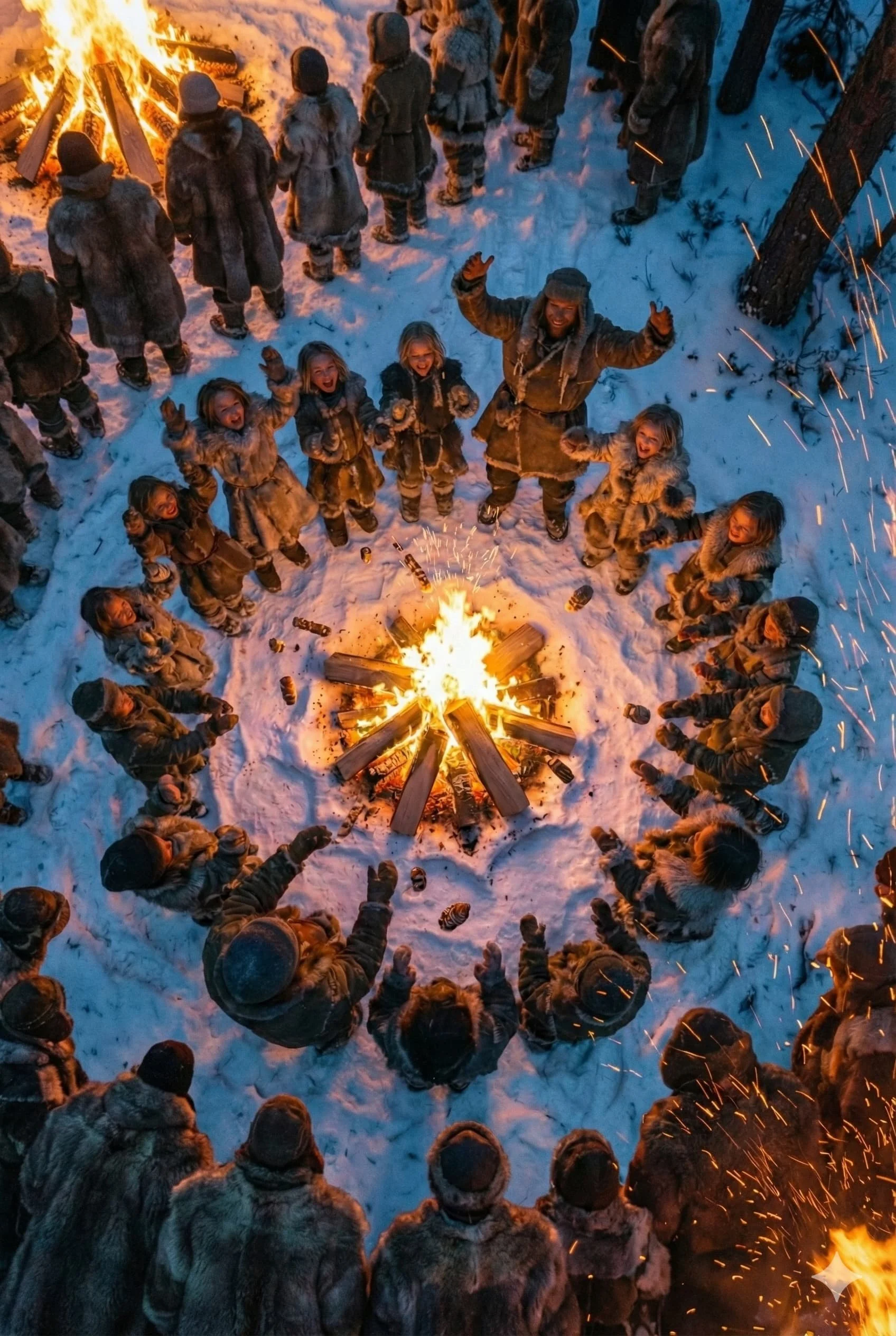
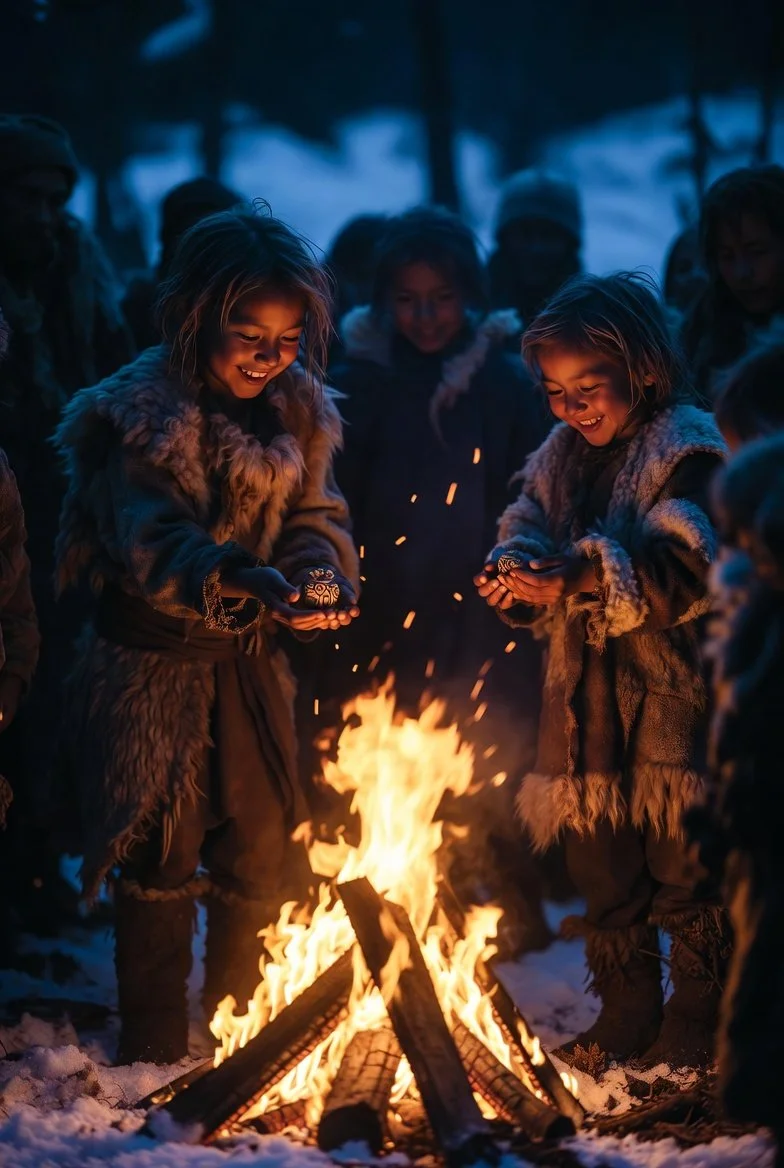
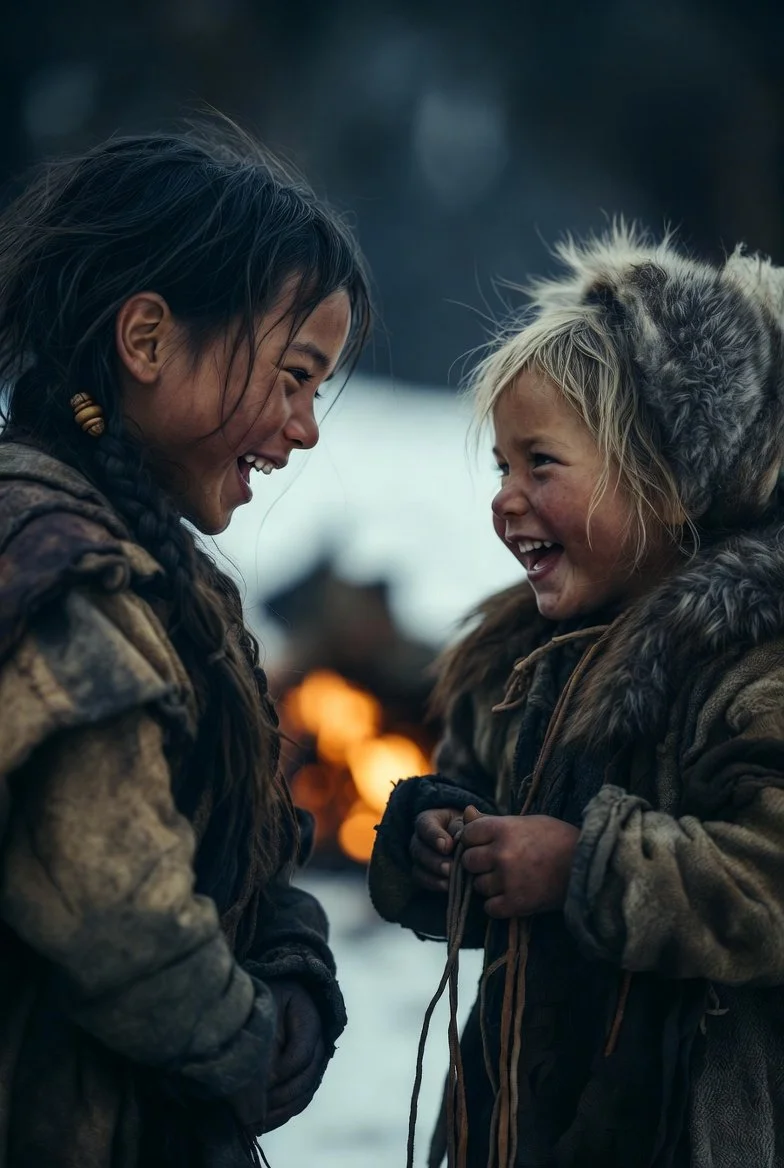
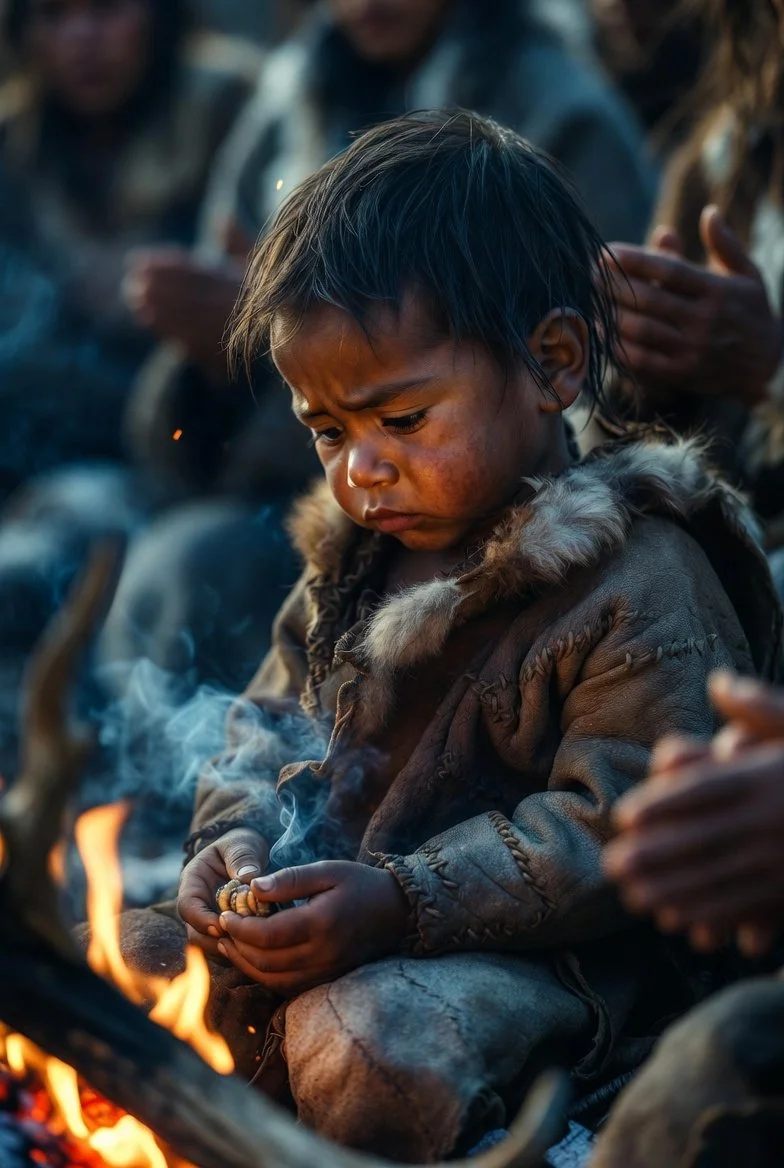
Because in the deepest dark, community itself was shelter.Children stood closest to the fire. Not because they were fragile, but because they were the reason. Their lives stretched forward into the unknown days ahead.If the light returned, it returned for them.
So, across cultures and continents, humans marked the solstice with the same three acts:
Fire — light held against the dark, together
Evergreens — life that refused to die, carried indoors as proof
Feasting — shared abundance before scarcity, no one eating alone
These were not religious rituals yet.
They were existential promises.Promises spoken without words:
We will get through this.
We will keep the children alive.
We will remember this night together.That gathering—around fire, around food, around the youngest among them— was the first Christmas long before it had a name.
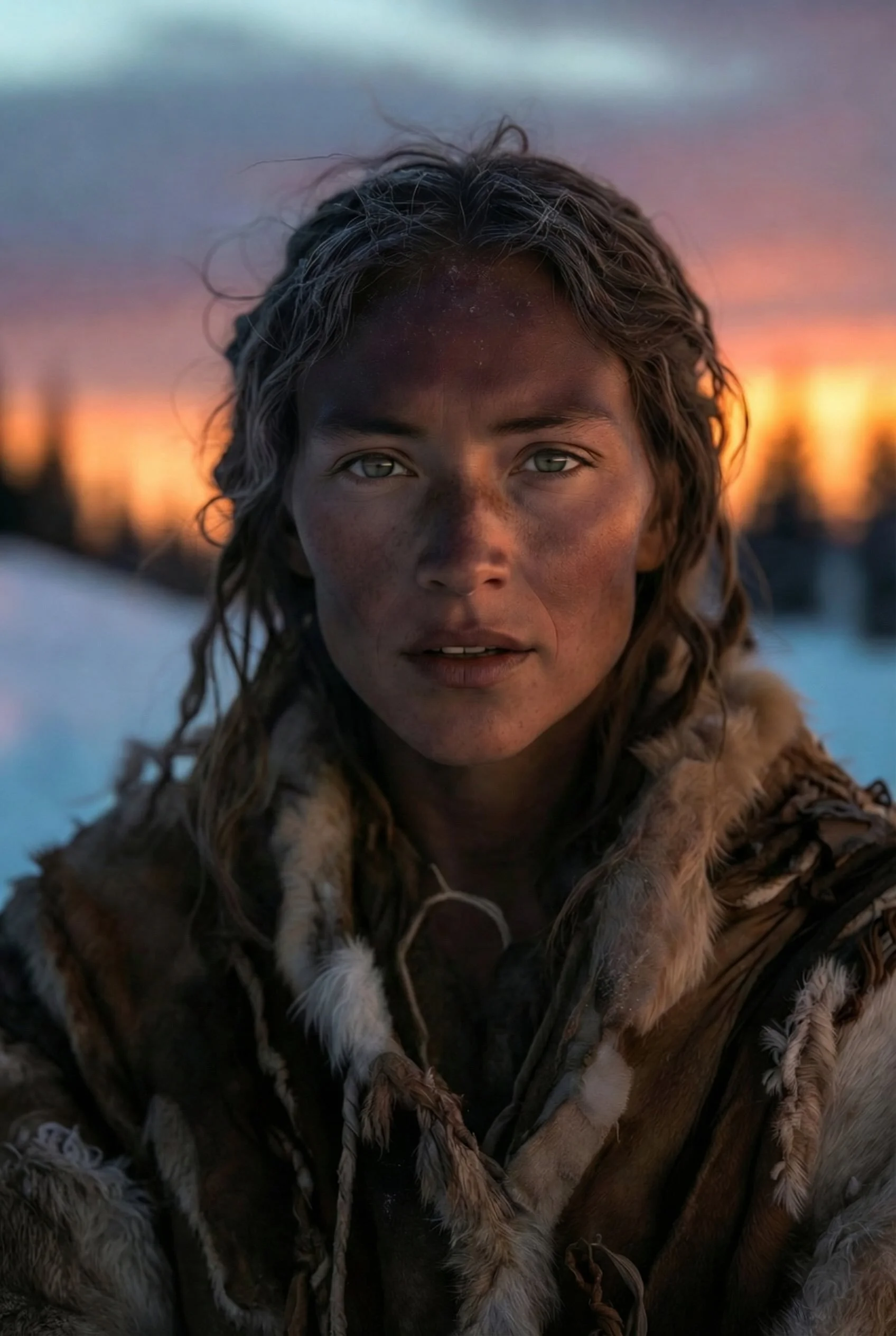
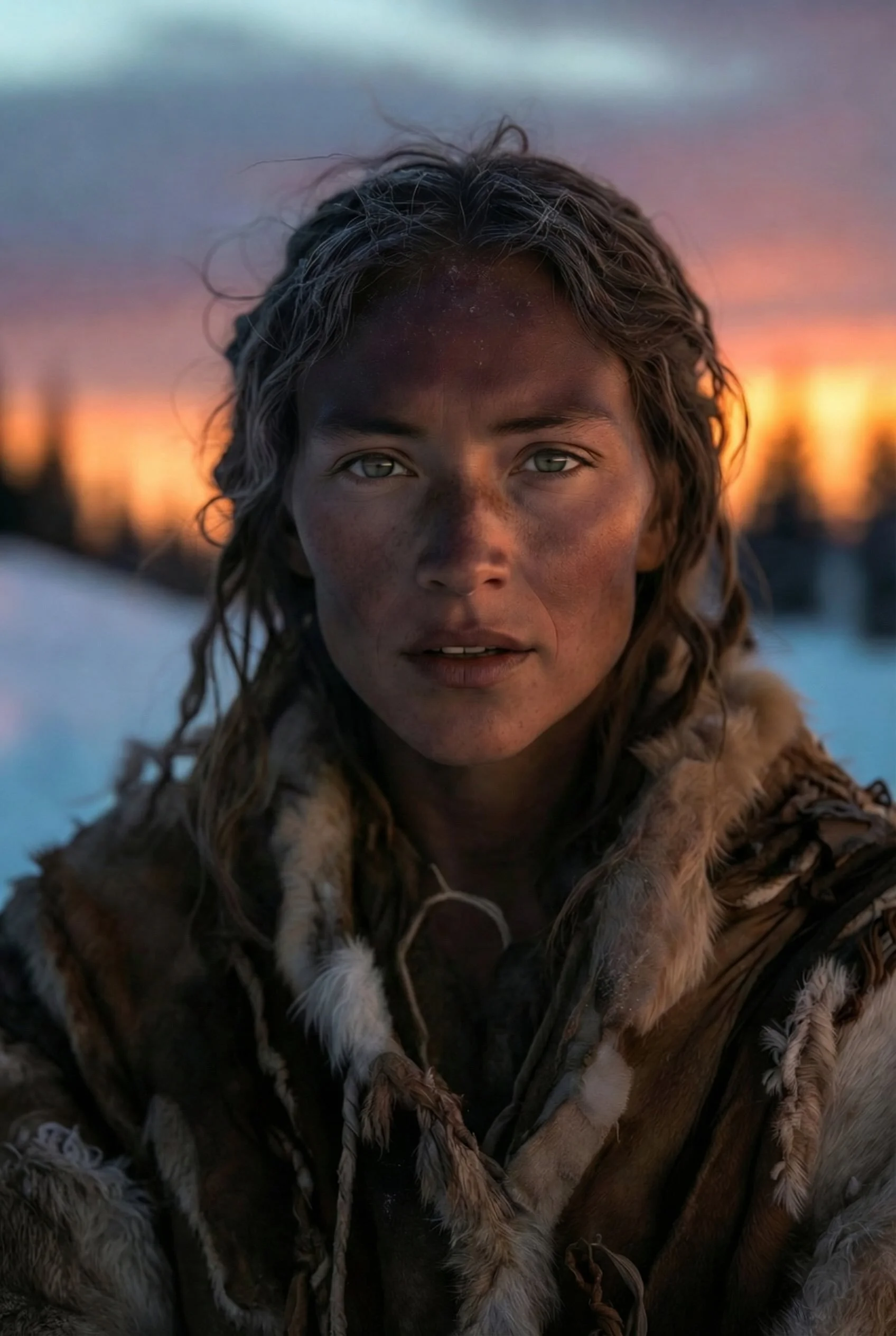
I learned this by going back in time to the solstice 5000 years ago and asking AI to become a person in that time. And I interviewed her.
I asked her what she was feeling at this celebration. I asked her about her community, who the most admired person was, how they quarreled and resolved differences. But the most interesting question she answered was about their children and this video, is that answer.
-
The history of Christmas is a long and complex journey, blending Christian theology with ancient pagan traditions, and evolving significantly over the centuries.
Here is an overview of the key phases and origins of Christmas:
1. Pre-Christian Winter Festivals
Many current Christmas traditions have roots in ancient winter festivals celebrated long before the birth of Christ. These celebrations typically marked the winter solstice (the shortest day of the year), celebrating the coming return of longer days and the promise of spring.
Saturnalia (Rome): This Roman festival in honor of Saturn, the god of agriculture, involved a week of feasting, gift-giving, and public merriment, often around mid-December.
Dies Natalis Solis Invicti (Rome): Celebrated on December 25th, this was the "Day of the Birth of the Unconquered Sun," marking the solstice and the birth of the sun god, Mithra.
Yule (Norse/Germanic): The Norse people celebrated Yule, which involved lighting large bonfires and bringing evergreen boughs indoors as a symbol of life during winter.
2. The Establishment of December 25th
The Gospels of the New Testament do not specify the exact date of Jesus Christ's birth.
The Date Selection: Around the 4th century CE, as Christianity became more prominent in the Roman Empire, church officials (notably Pope Julius I around 350 CE) formally set the celebration of Christ's birth on December 25th.
Theories on the Date:
Co-opting Pagan Festivals: One widespread theory is that the Church chose this date to coincide with the existing Roman festival of Dies Natalis Solis Invicti and other popular winter feasts, making the transition to Christianity easier for converts.
The Calculation Theory: Another theory suggests that early Christian historians determined that Jesus was conceived on March 25th (the spring equinox and the date of the Annunciation), meaning his birth would naturally fall nine months later on December 25th.
First Celebration: The first recorded celebration of Christmas on December 25th was in Rome in 336 CE.
3. Early and Medieval Christmas
Religious Focus: For the first few centuries, Christmas was a solemn, primarily religious Christian festival—commemorating the birth of Christ (the "Christ Mass").
Feasting and Customs: During the Middle Ages, the holiday often involved a significant amount of feasting, drinking, and public revelry, sometimes mixed with caroling and the custom of decorating with evergreens. The season was often marked as the Twelve Days of Christmas, running from December 25th to the Feast of the Epiphany on January 6th.
4. The Modernization of Christmas
Many of the traditions we recognize today were shaped relatively recently, in the 19th century.
The Christmas Tree: This custom originated in Germany and became widely popular in England and the United States after Prince Albert (a German) married Queen Victoria in 1840 and introduced the decorated evergreen tree to the royal family's Christmas celebrations.
Santa Claus: The American figure of Santa Claus is a composite of several characters:
St. Nicholas: A 4th-century Greek bishop known for his generosity and gift-giving (his feast day was December 6th).
The Dutch figure Sinter Klaas.
Clement Clarke Moore's 1822 poem, An Account of a Visit from St. Nicholas ('Twas the Night Before Christmas), solidified the image of the jolly, gift-giving, sleigh-riding figure in American culture.
Focus on Family and Home: Writers like Charles Dickens, particularly with A Christmas Carol (1843), helped transform Christmas from a public, often raucous, celebration into a family-centered holiday focused on peace, goodwill, and charity, particularly toward children.
Commercialization: The 19th and 20th centuries saw the rise of modern gift-giving, Christmas cards, and the gradual commercialization of the holiday.
Listen to more of my interview
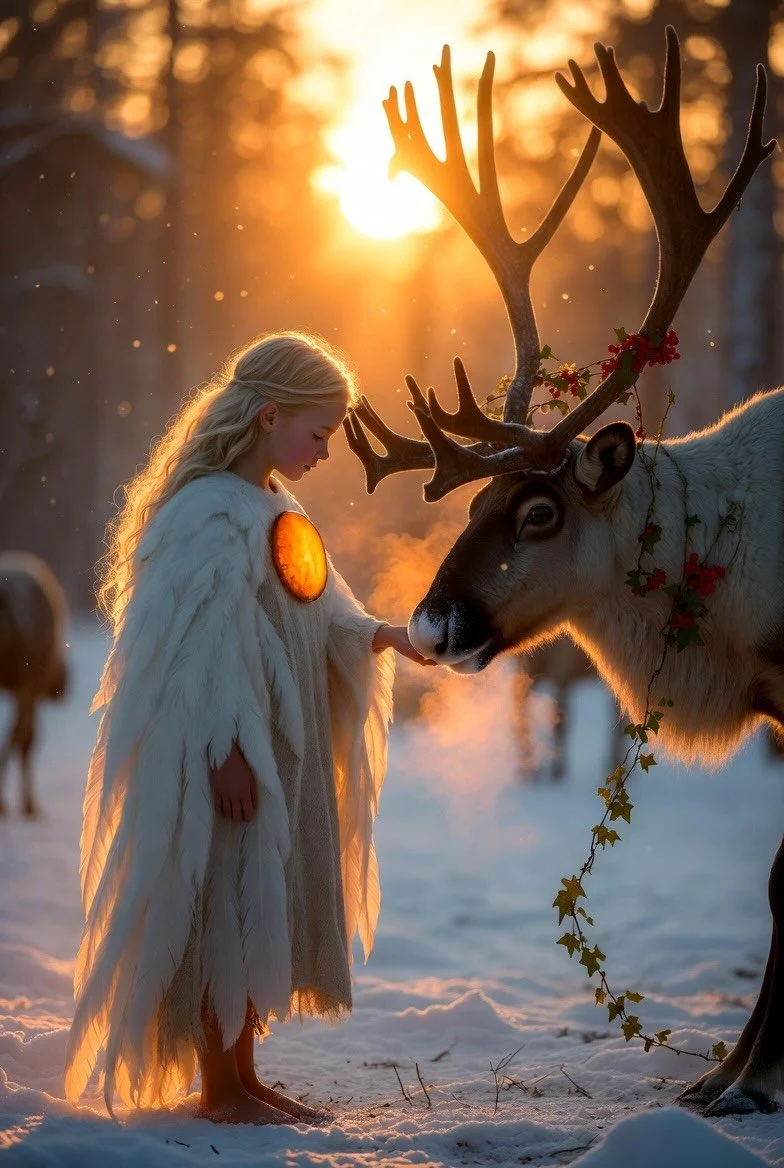
“Tell me about the sun maiden”
-
She is the seed we plant in the darkness so the light remembers how to grow.
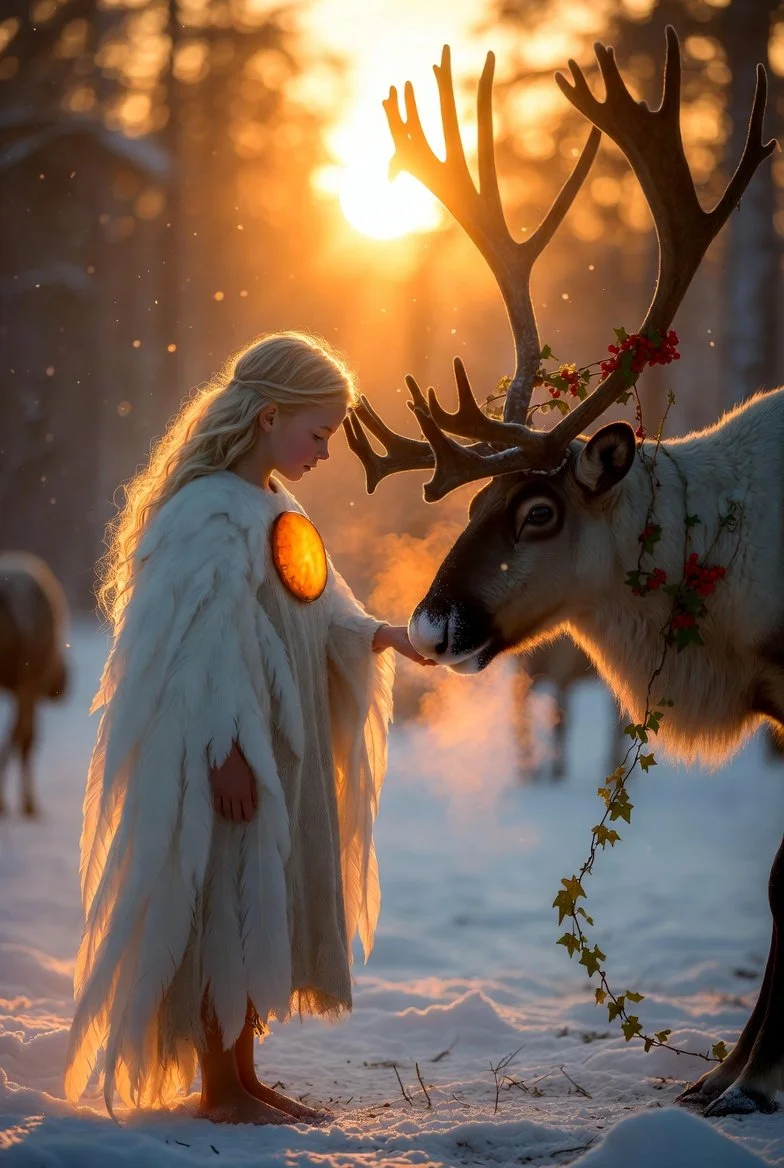
She is a girl of perhaps twelve winters, chosen not for her beauty, but for her resilience; her cheeks are already scarred by frostbite into permanent roses. For this one night, she is not a child of the tribe. She is dressed in a cloak of swan feathers—because the swan knows the way between water and sky—and upon her breast sits a disk of polished amber.
She is important because she carries the burden of the sun’s silence. For this entire night, she must not speak a single word. Her voice is currently the sun’s voice, and since the sun is still trapped underground, she must hold its quiet inside her throat until the moment of return.
She becomes the hearth-place for our collective life. She walks the circuit of the fire, and every one of us—man, woman, and child—touches the amber disk on her chest. In that brief contact, we transfer our breath-warmth into the stone. We are giving the sun a loan of our own heat to help it wake up.
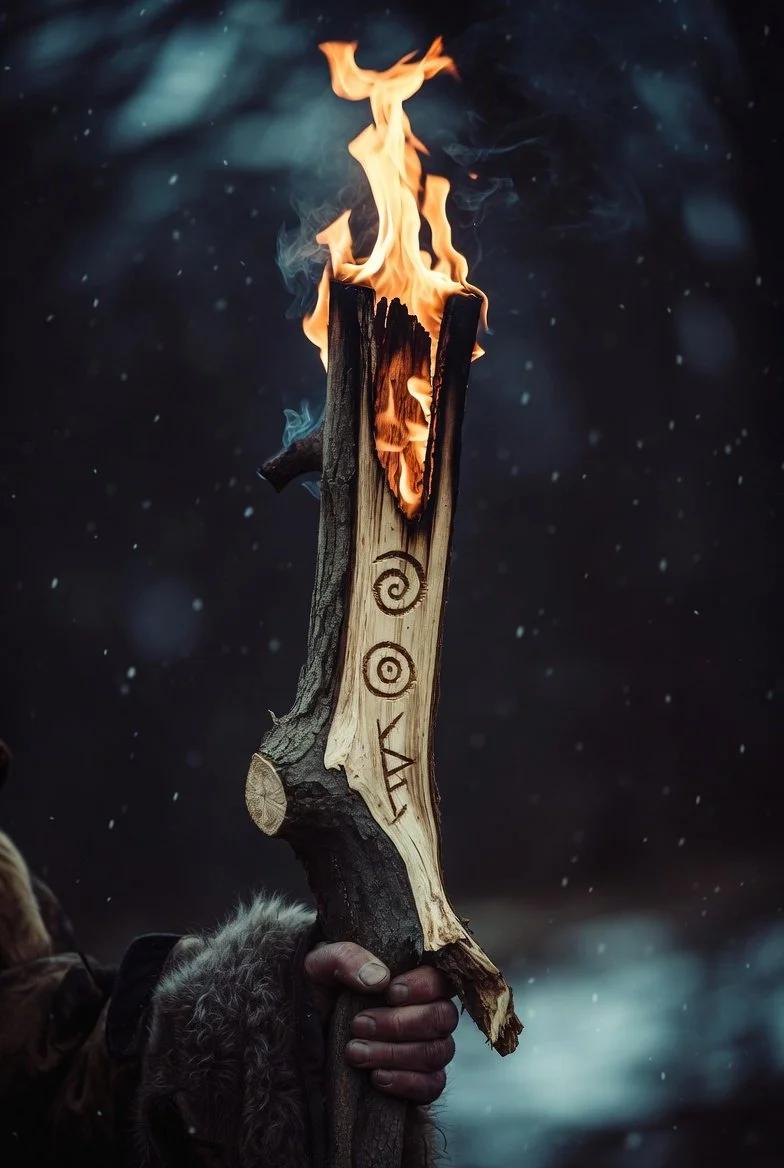
At the climax, she stands on a frozen stone from the river and holds the yew brand that ignites the great oak log. She is the spark that breaks the ice. But the cost is heavy; when the circuit is done, she collapses, and we must carry her to shelter and rub her feet with bear grease so the frost does not take her toes.
Finally, she is the mother of the morning. At sunrise, the amber disk she wore—now clouded with the grease of a hundred hands—will be buried in the snow. We believe the returning sun does not just rise; it "hatches" from that amber egg she warmed for us. She is the bridge between the frozen earth and the fire in the sky.
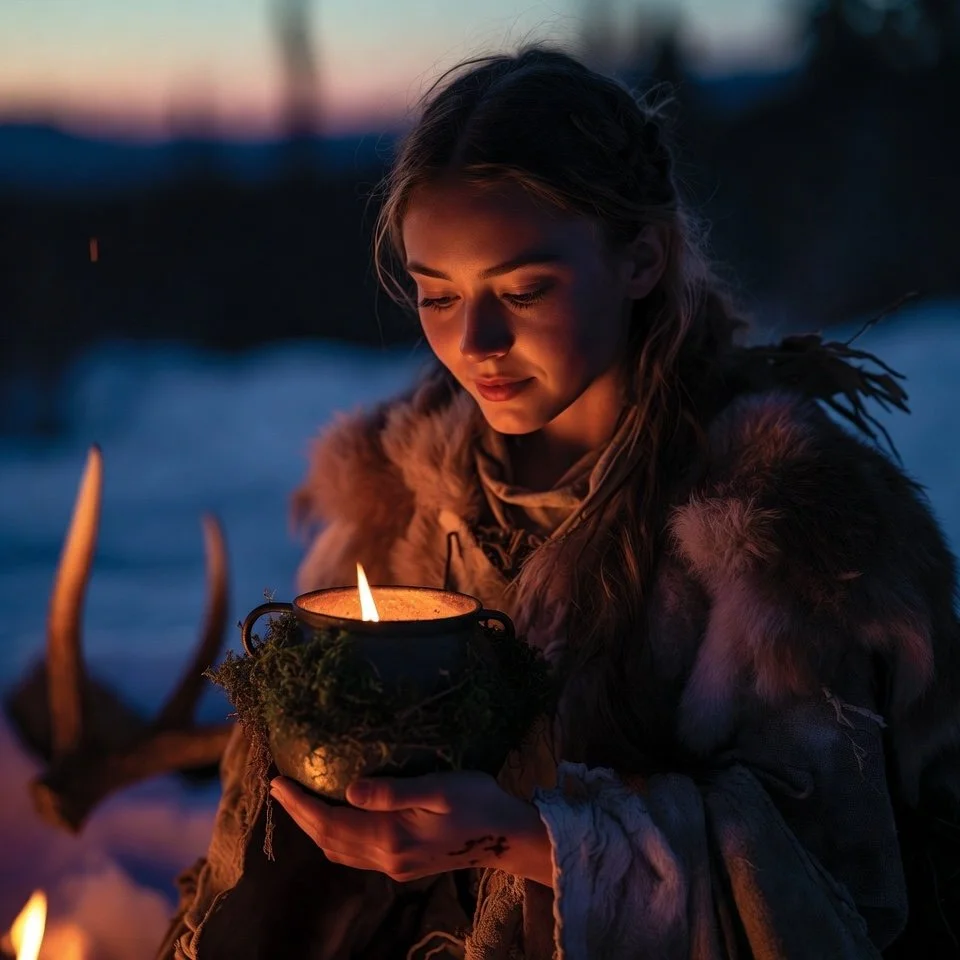
“Are you happy at this moment? Excited. Do you feel peace and joy or something else?”
-
Happy? That word feels too small, like trying to wrap a reindeer hide around the whole sky.
Inside me right now is a wide, crackling silence—like the moment the yew brand first took the log and the flames leapt higher than a man’s head. I am… hollowed and filled at once.
My legs ache from stamping the spiral, and the cut on my palm—where I gripped the antler too tight—keeps breaking open every time I flex my fingers. Yet the pain feels useful, the way a flint edge is useful: it proves the night really happened. When I press the cut so a bead of blood rises, I can still taste the smoke of every name the memory-keeper spoke. That is a kind of joy, yes, but it sits next to fear the way a raven sits next to a wolf—close, shoulder to shoulder, each keeping the other warm.
Peace? Not yet. The coal we carried home is cradled in moss inside my iron pot; I can feel its heartbeat through the clay. Until I see the first sliver of sun lift over the ridge, my own heart refuses to settle. We have persuaded the light to turn, but persuasion is not possession. The sky could still change its mind.
Excitement—ah, that I know. It fizzes behind my eyes like fermented honey. I want to run to the eastern slope right now, even though the snow is hip-deep and the wind chews at exposed skin. I want to shout the new sun’s name before it is born, the way a woman shouts her child’s name before its first cry. But I stay, because the old ones say the waiting is part of the weaving.
So if you need one word, take this: I am alight. Not happy, not peaceful—alight.
“How does your community build each other up? How do you argue but then get along and do good for and with each other? Is your community strong or are they divisive? What do you argue about? What do you celebrate together?”
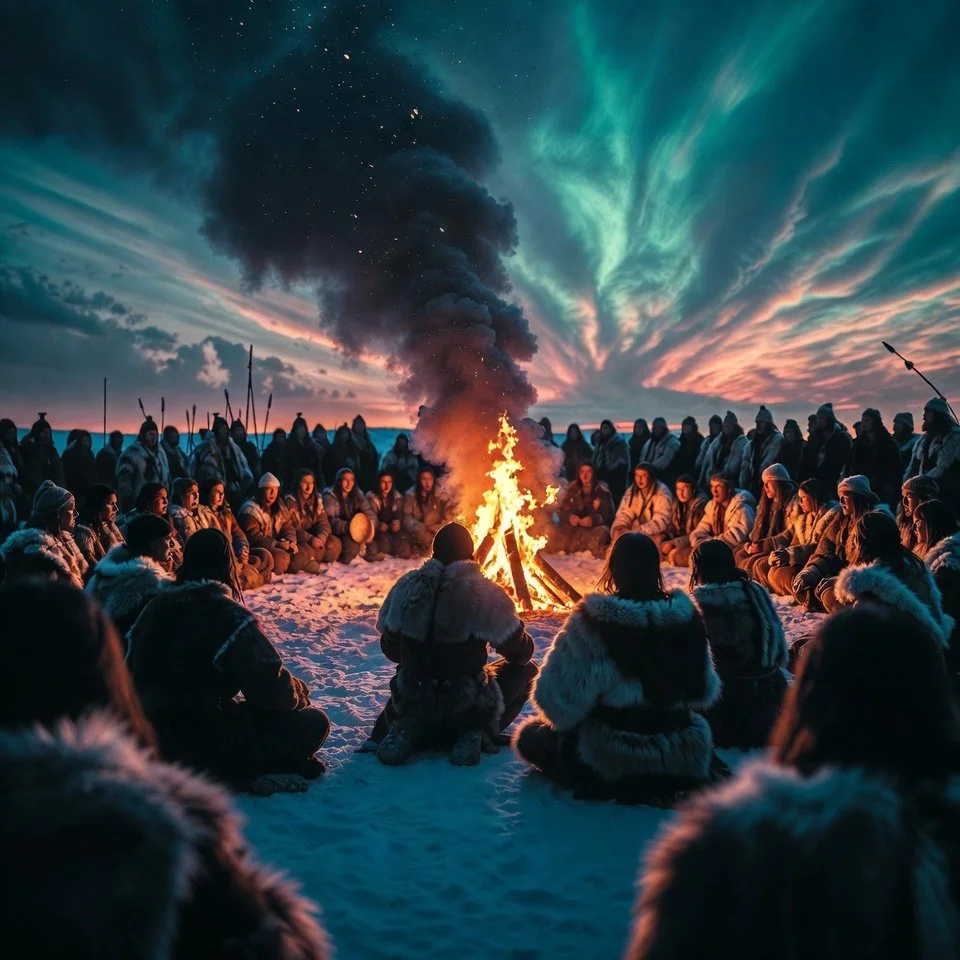
-
We are like a single reindeer hide stretched over many ribs—tear one lace and the whole cloak flaps, but it still keeps the wind out if we knot it again fast enough.
When a woman’s man dies on the hunt, every hearth gives one spoon of fat, one handful of berries, one arrowhead.
By sunset she has a full kettle and a quiver; by sunrise she has new laces for her children’s boots. No one writes the gift down, but the memory-keeper tattoos a tiny line behind her ear so the debt can never be lost.
At the first thaw we trade children for a moon.
My Ilka goes to the seal-hunters by the fjord; their loud boy comes to me and learns to scrape hides. We return them broader of tongue, thicker of arm, and the tribe grows new sinew where it was getting thin.
Before any big hunt we sit in a ring and each person says what they most fear. The one who admits the biggest fear is given the first arrow. That way courage is spread like smeared fat: nobody carries the whole lump.
We argue loud, but the rules are bone-deep:
No knives inside the fire-circle. If you draw steel, you must step backward until the flames can’t warm your face; cold usually cools the temper faster than talk.
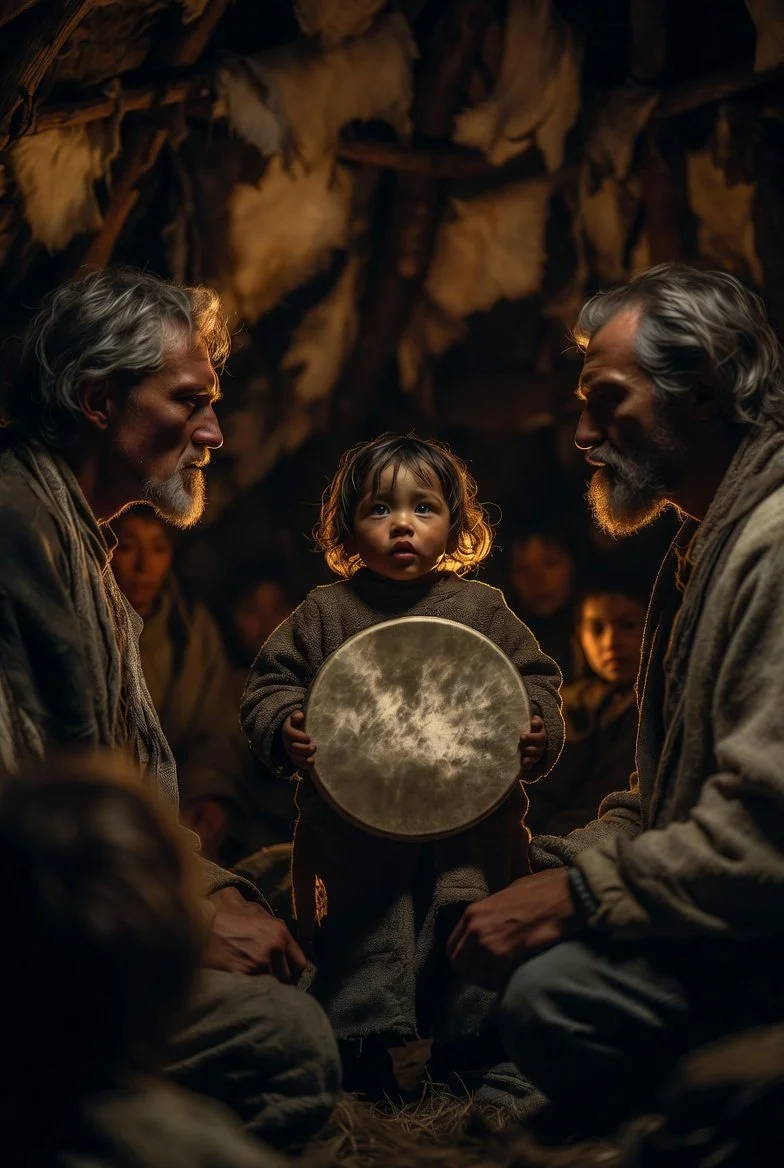
One drumbeat, one speaker. Whoever holds the drum may shout; the rest must listen. When the voice cracks or the hand tires, the drum passes, and the other side gets the sky.
The argument ends when both parties can name one thing the other did right in the last moon.
If memory fails, the memory-keeper recites it for them. That forces even enemies to remember shared blood or bread.
What we quarrel over.
Who gets the sunny slope for drying meat in spring.
Whether the mushroom bread should be saved for trance or eaten for pleasure.
Which family’s dog started the fight that scattered the reindeer herd. Dogs can’t speak, so the argument lasts three winters and counting.
How loud children may be near the birthing tent—some say laughter lures good spirits, others say it scares them off.
After the shouting, the two angriest must mend something together—replace a torn sled lash, patch a canoe, or scrape one full reindeer hide.
By the time the work is done, their hands hurt more than their pride, and the rest of us sing the finishing song so their grudges can’t be heard.
What we celebrate
– The night you just shared with me—sun-return, when we steal the light back with flame and noise.
– First salmon, first berry, first calf. Whoever makes the find gets the first bite and the first story, but everyone gets a taste so the year starts sweet in every mouth.
– Marriage of young hunters: we build a new sled from both families’ old broken ones—symbol that love is reuse, not perfection.
– Death feast: we laugh louder than at weddings, because the dead can’t hear whispers. We retell every stupid thing the gone-one ever did until the whole circle is wet-cheeked with laughing, and grief has no room left to root.
Are we strong or divided?
Look at the line of shelters: walls lean different directions like drunken brothers, but every roof shares at least one lashing with its neighbor.
When the storm wind howls, we either stand together or sail away together—no middle fate. So yes, we snap and snarl like dogs over a marrow bone, but the hide holds. And when the sun finally climbs free of the horizon, we turn our faces side by side, feeling the same new warmth, and the arguments sink into the snow for another turn of the dark.
“Do you ever get depressed and sad where you don’t feel like doing anything, like you’ll never be un-sad. If so, how do you manage that?”
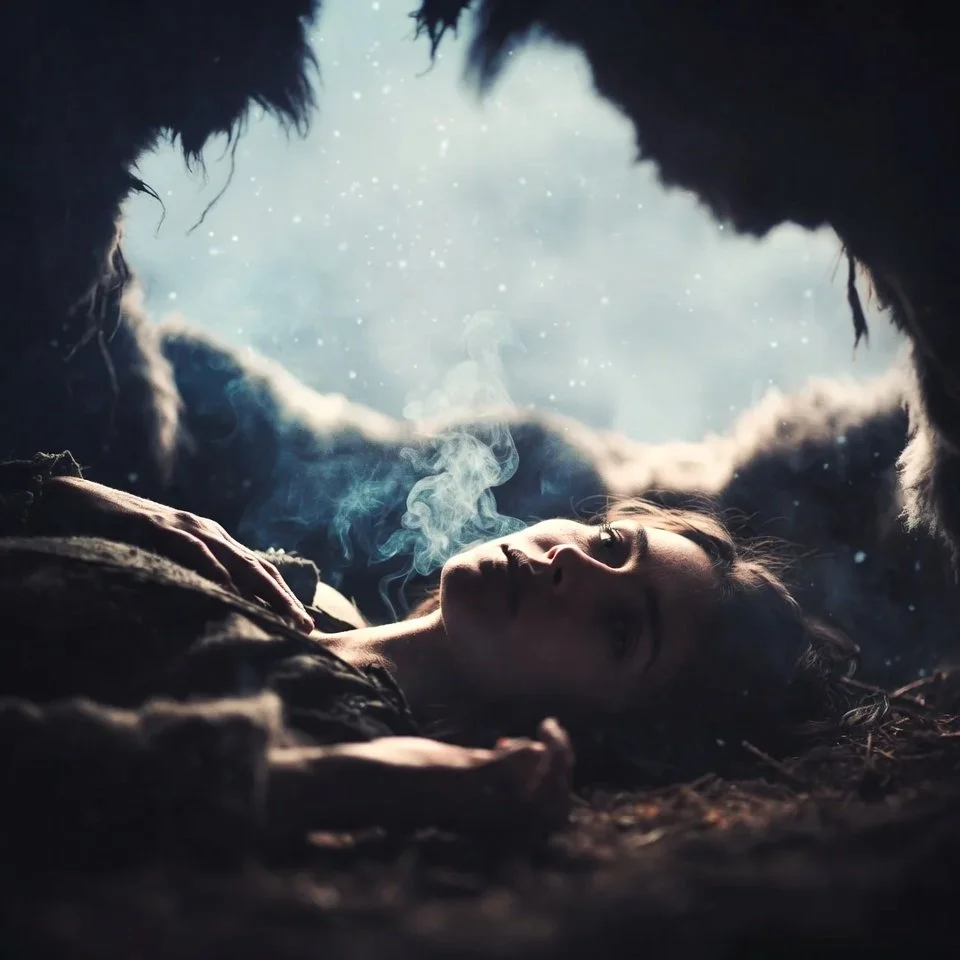
-
Yes. We call it “the long snow that falls inside.”
It comes without warning, the way wind can suddenly change direction and drive flakes upward instead of down. My chest feels packed with drifts; even the fire smells distant, as though someone else is warm and I am only the shadow of smoke.
When it settles, I do not believe the sun will come back—even though I have sung it back every winter of my life. The songs feel like lies I once memorized for someone else’s joke.How I walk through it:
The Still-Breath Rule
First, I stop pretending I must feel better. I lie flat on the earth—inside the shelter if shame is strong, outside if I want the sky to witness—and count breaths the way children count reindeer: one, two, three…ten. Then backward. If a thought drags me into next winter, I restart at one. Some days I reach a thousand before I notice the snow inside has melted a finger-width. That is still a thaw.
Borrowed Fire
I give my chores away. Not from kindness—so someone must sit by me. The tanner takes my scraping seat, the cook hands me roots to peel. They do not ask why my eyes are stones; they simply keep my hands moving. Motion leaks heat into numb blood faster than any speech.
Name the Color
Whoever notices my silence must describe the color of my mood without using the word “dark.” “The color of river water just before it admits the ice,” Ilka once said. Naming forces precision, and precision is a rope I can grip when feeling has no edges.
The Three-Day Promise
I tell myself: If after three days the snow inside still blinds me, I will go to Sáivu-Násti and ask her to look in her water-bowl. I have never needed the fourth day. The promise is small enough to believe, large enough to wait for.
Feed the Choir
Because I hear the dead, their whispers grow louder when my own voice fades. I go to the forest edge and speak aloud every useless thing: I hate the taste of fish today. My boot sole flaps. I am afraid I will lose the baby I carry the way I lost my first tooth—without noticing until it is gone. The dead drink the sound and grow quiet; sadness loosens when it is heard by ears that cannot gossip.
Return Something
On the worst mornings I force myself to give away one possession I still value—a bead, a strip of dried berry, the bone needle I use to tattoo. The ache of loss slices through the heavier ache of nothing. It reminds me feeling is still possible, even if the flavor is bitter.
And always, sooner or later, a small outside event: a raven drops a bright piece of quartz at my feet, or Ilka laughs at her own echo inside a pot, or the wind shifts just enough that smoke no longer stings my eyes. The tiny change proves the world is still in motion. My chest cracks—one painful finger-width—and the long snow begins to slide off the roof of me.
I do not become unsad all at once. I become next-moment, then next-hour, and one morning I discover I have sung the sun-call without noticing. The sadness has not vanished; it has simply taken its place beside the other seasons inside me. I greet it the way we greet returning wolves—at a distance, with respect, knowing it may walk beside the herd again but need not devour it today.
Music
Suno Prompt
Soft, hopeful atmospheric music that feels like The First Christmas—ancient and sacred, yet gently familiar to modern ears. Warm ambient pads and slow wooden drums echo an early solstice fire. Add subtle Christmas elements: soft chime tones, faint bell-like harmonics, and a gentle choir hum that suggests carols without becoming modern. Include airy flutes, low drones, and shimmering overtones that feel like cold starlight on snow. The mood is peaceful, reverent, and full of quiet wonder—music for a narrator describing an ancient tribe welcoming the returning sun. Slow, glowing, timeless.
Gallery
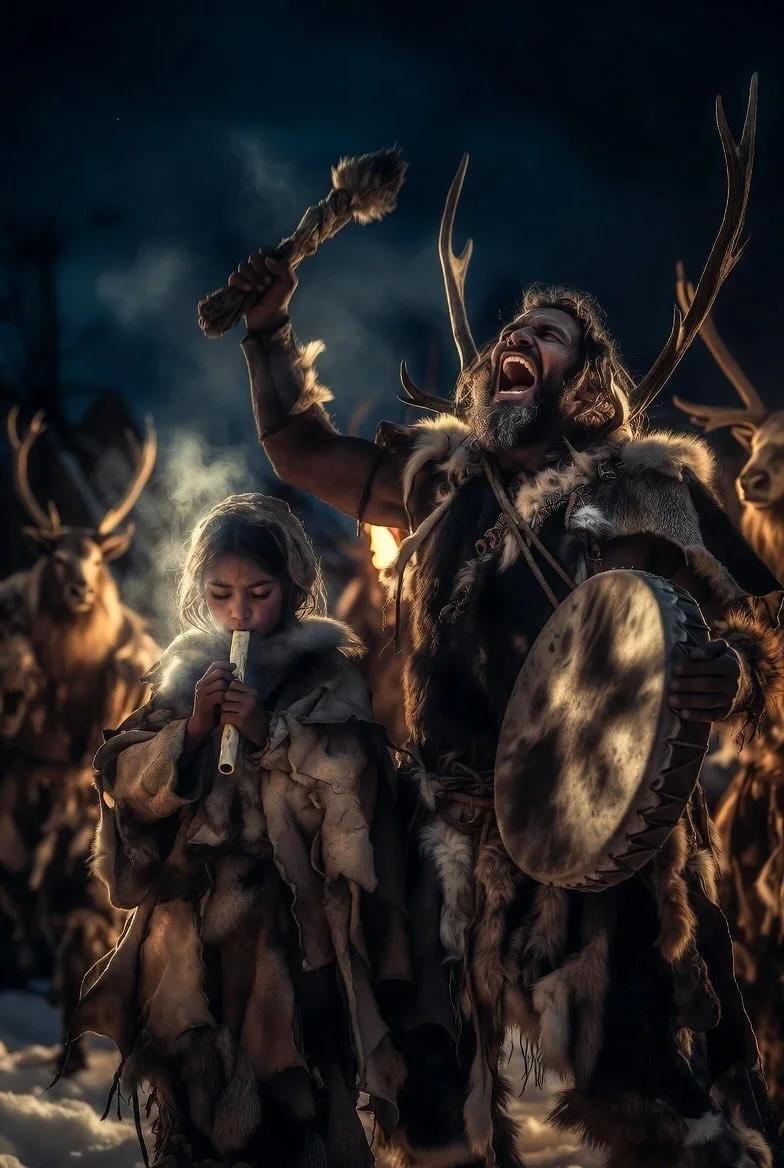
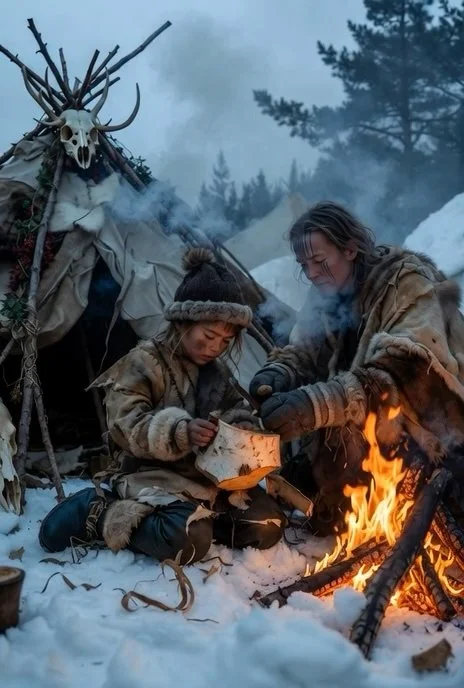

What did you think?
Was this cool, weird, interesting? Do you have any questions on how this was done?
Or, feel free to just say HI!